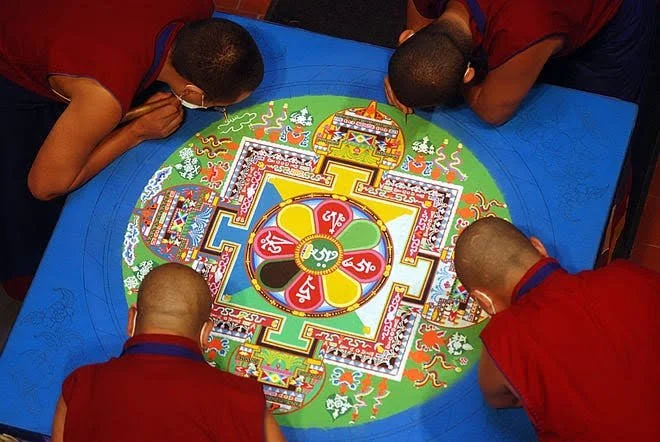
The Tibetan Sand Mandala Tradition
Perhaps one of the most remarkable expressions of mandala art comes from Tibetan Buddhist monks.
Within Tibetan Buddhism, mandalas hold profound spiritual meaning. They serve as sacred representations of thought the universe and as visual guides during meditation, helping practitioners focus their minds on spiritual understanding and enlightenment.
One particularly extraordinary tradition is the creation of intricate sand mandalas.
Using specially designed instruments, monks carefully place millions of tiny grains of coloured sand into elaborate geometric patterns. The process can take several days, sometimes longer, requiring tremendous patience, concentration, and precision.
Every detail has meaning, and the creation is accompanied by prayer, chanting, and meditation.
Yet something truly remarkable happens when the masterpiece is complete.
The monks carefully dismantle it.
After dedicating countless hours to its creation, they sweep the coloured sand together, often returning some of it to flowing water.
Why would they destroy something so beautiful?
Because the ceremony expresses one of Buddhism's fundamental teachings: impermanence. This rich heritage is a cornerstone of why meditative and mindful art continues to resonate deeply in modern homes today.
Nothing in life remains unchanged forever. The ritual encourages an appreciation of the present moment and reminds us that beauty and meaning can exist even in things that do not last.
It is a powerful lesson in patience, devotion, and the art of letting go.